
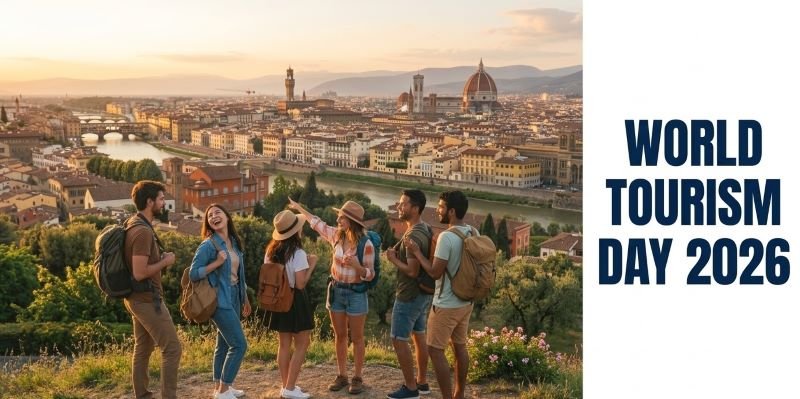
World Tourism Day 2026: Overview
World Tourism Day is observed every year on 27 September to highlight the importance of tourism and its contribution to social, cultural, economic and environmental development.
According to the official UN Tourism information, the 2026 theme is “Digital Agenda and Artificial Intelligence to Redesign Tourism.” The theme focuses on how digital technologies and artificial intelligence can transform tourism by improving decision-making, developing skills, and making destinations more inclusive, efficient and sustainable.
For aspirants preparing for SSC, Railway, and competitive exams, World Tourism Day is a high-yield topic-frequently tested on areas like theme, historical background, significance, and the role of Tourism in India’s economy.
World Tourism Day 2026: Important Facts at a Glance
| Particular | Details |
|---|---|
| Day | World Tourism Day |
| Date | 27 September 2026 |
| 2026 Theme | Digital Agenda and Artificial Intelligence to Redesign Tourism |
| Observed since | 1980 |
| Organisation associated | UN Tourism, formerly known as the World Tourism Organisation |
| Main focus | Tourism, digital transformation, artificial intelligence, inclusion and sustainability |
| Exam relevance | SSC, Railway, and other examinations. |
Read the article: Shantanu Moitra to Receive National Lata Mangeshkar Award 2026
What Is World Tourism Day?
World Tourism Day is an international observance dedicated to tourism and its wider impact on society. Tourism is not limited to travel and sightseeing. It also supports employment, local businesses, cultural exchange, heritage conservation and regional development.
The day encourages governments, tourism organisations, businesses and communities to examine how tourism can become more responsible and beneficial. It also draws attention to the need for tourism that protects the environment, respects local cultures and provides opportunities for people from different backgrounds.
World Tourism Day 2026 Theme
The theme of World Tourism Day 2026 is “Digital Agenda and Artificial Intelligence to Redesign Tourism.”
The theme recognises that technology is changing the way people plan, book and experience travel. Artificial intelligence can help tourism authorities and businesses analyse information, understand visitor needs and manage destinations more effectively.
Key areas covered by the 2026 theme
- Smarter decision-making: Data and artificial intelligence can help authorities understand tourism trends and plan services more effectively.
- Improved visitor experience: Digital tools can provide better travel information, personalised recommendations and faster services.
- Skill development: The tourism workforce needs digital knowledge and training to adapt to technological change.
- Inclusive tourism: Technology can support accessible travel and help more people participate in tourism.
- Sustainable destination management: Digital systems can help destinations manage visitor numbers, resources and environmental pressure.
- Responsible use of artificial intelligence: AI should be used ethically, transparently and in a way that benefits communities as well as businesses.
History of World Tourism Day
The date of World Tourism Day is linked to the adoption of the Statutes of the World Tourism Organisation on 27 September 1970. These statutes provided an important foundation for international cooperation in tourism.
World Tourism Day was first officially observed in 1980. Since then, it has been celebrated every year with a different theme. Each theme highlights a major tourism-related issue, such as sustainable development, rural development, cultural exchange, peace, innovation or digital transformation.
The organisation associated with the observance is now called UN Tourism. It was formerly known as the World Tourism Organisation, or UNWTO.
Significance of World Tourism Day 2026
1. Promotes sustainable tourism
Tourism can create employment and income, but uncontrolled tourism may also put pressure on natural resources and local communities. The 2026 theme supports the use of technology to make tourism more sustainable and responsible.
2. Highlights the role of artificial intelligence
Artificial intelligence is increasingly being used in travel planning, customer service, translation, destination management and tourism research. World Tourism Day 2026 draws attention to the opportunities and responsibilities connected with these developments.
3. Supports inclusive development
Tourism can connect people, regions and cultures. Digital platforms can improve access to information and help small businesses, local guides and rural destinations reach a wider audience.
4. Encourages employment and skill development
The tourism sector creates direct and indirect employment in transport, hotels, restaurants, travel services, handicrafts and cultural activities. Digital transformation also creates a need for new technical and professional skills.
5. Protects culture and heritage
Responsible tourism can support the preservation of historical monuments, traditional art, local food, languages and cultural practices. Technology can assist in documentation, promotion and interpretation of cultural heritage.
Role of Technology in Modern Tourism
Technology has changed almost every stage of travel. Tourists can now search for destinations, compare services, book transport and accommodation, use digital maps and share feedback through online platforms.
Artificial intelligence can further improve tourism through:
- Chatbots and virtual travel assistants
- Multilingual translation tools
- Personalised travel recommendations
- Demand forecasting
- Crowd and traffic management
- Fraud detection and secure booking systems
- Digital interpretation of museums and heritage sites
- Better accessibility tools for travellers with disabilities
At the same time, technology must be used carefully. Tourism organisations should protect personal information, reduce digital exclusion and ensure that automated systems are fair and transparent.
World Tourism Day and India
India has a wide range of tourism resources, including historical monuments, pilgrimage centres, wildlife reserves, beaches, hill stations, museums, festivals and cultural traditions. Tourism is important for local employment, handicrafts, transport, hospitality and regional development.
For India, digital tourism can improve the visibility of lesser-known destinations and support local communities. Online information, digital payments, multilingual services, virtual tours and better connectivity can make travel more convenient and accessible.
Competitive-exam aspirants should remember that questions may connect tourism with heritage conservation, sustainable development, employment, cultural exchange, digital technology and artificial intelligence.
Role of Tourism in India’s Economy
Tourism is an important contributor to India’s service-sector economy. According to a Press Information Bureau release dated 31 July 2026, India’s tourism and hospitality sector contributed approximately ₹15.73 lakh crore to the GDP in 2023–24, representing 5.22% of the country’s economy. The sector also supported around 84.6 million direct and indirect jobs.
Tourism contributes to India’s economic development through hotels, transport, restaurants, travel agencies, handicrafts, local businesses and cultural activities. It also supports foreign-exchange earnings, rural employment, infrastructure development and the preservation of historical and cultural heritage.
One-liner: Did you know tourism contributed ₹15.73 lakh crore to India’s GDP in 2023–24 and supported 84.6 million jobs? Read the official facts every SSC and Railway aspirant should remember.
Source: Press Information Bureau, Government of India, “India as a Tourism Hub”
Ministry of Tourism and NITI Aayog, “Unlocking Growth in Tourism and Hospitality Sector”
Exam-Oriented Revision Notes
- World Tourism Day: 27 September
- World Tourism Day has been observed since: 1980
- The date is connected with: Adoption of the Statutes of the World Tourism Organisation in 1970
- Current name of the organisation: UN Tourism
- Former name: World Tourism Organisation / UNWTO
- World Tourism Day 2026 theme: Digital Agenda and Artificial Intelligence to Redesign Tourism
- Main 2026 focus: Digital transformation, AI, skills, inclusion and sustainable tourism
- Tourism contributes to: Employment, economic growth, cultural exchange and heritage conservation
World Tourism Day 2026 MCQs for SSC and Railway Exams
1. World Tourism Day is observed every year on which date?
A. 21 September
B. 25 September
C. 27 September
D. 30 September
Answer: C. 27 September
2. What is the theme of World Tourism Day 2026?
A. Tourism and Rural Development
B. Tourism and Peace
C. Digital Agenda and Artificial Intelligence to Redesign Tourism
D. Tourism for Inclusive Growth
Answer: C. Digital Agenda and Artificial Intelligence to Redesign Tourism
3. World Tourism Day has been officially observed since which year?
A. 1970
B. 1975
C. 1980
D. 1985
Answer: C. 1980
4. World Tourism Day is associated with which organisation?
A. UNESCO
B. UN Tourism
C. UNICEF
D. UNDP
Answer: B. UN Tourism
5. The date of World Tourism Day is linked to the adoption of the Statutes of which organisation?
A. World Health Organisation
B. World Tourism Organisation
C. International Labour Organisation
D. World Trade Organisation
Answer: B. World Tourism Organisation
6. The Statutes connected with World Tourism Day were adopted in which year?
A. 1965
B. 1970
C. 1975
D. 1980
Answer: B. 1970
7. What was the former name of UN Tourism?
A. UNWTO
B. UNCTAD
C. UNEP
D. UNIDO
Answer: A. UNWTO
8. Which of the following is a major focus of the World Tourism Day 2026 theme?
A. Artificial intelligence in tourism
B. Space exploration
C. Agricultural exports
D. Ocean mining
Answer: A. Artificial intelligence in tourism
9. Which sector can receive direct and indirect employment benefits from tourism?
A. Hospitality
B. Transport
C. Handicrafts
D. All of the above
Answer: D. All of the above
10. Sustainable tourism mainly aims to balance tourism development with which factors?
A. Environmental and community interests
B. Only luxury travel
C. Only foreign travel
D. Only online bookings
Answer: A. Environmental and community interests
Frequently Asked Questions
Q1) When is World Tourism Day 2026?
Ans: World Tourism Day 2026 will be observed on 27 September 2026.
Q2) What is the theme of World Tourism Day 2026?
Ans: The theme is “Digital Agenda and Artificial Intelligence to Redesign Tourism.”
Q3) Why is World Tourism Day celebrated?
Ans: It is celebrated to highlight the social, cultural, economic and environmental importance of tourism and to promote responsible and sustainable tourism development.
Q4) Since when has World Tourism Day been observed?
Ans: World Tourism Day has been officially observed since 1980.
Q5) Which organisation is associated with World Tourism Day?
Ans: World Tourism Day is associated with UN Tourism, formerly known as the World Tourism Organisation or UNWTO.
Q6) What is the connection between 27 September and tourism?
Ans: The date marks the anniversary of the adoption of the Statutes of the World Tourism Organisation in 1970.
Q7) Why is the 2026 theme important for competitive examinations?
Ans: The theme connects tourism with artificial intelligence, digital transformation, sustainability, inclusion and skill development. These are important areas in current affairs and general awareness questions.
Q8) How much did tourism contribute to India’s GDP in 2023–24?
According to the PIB release citing official tourism-sector data, tourism and hospitality contributed approximately ₹15.73 lakh crore, equal to 5.22% of India’s economy, in 2023–24.
Q9) How many jobs did tourism support in India?
The tourism and hospitality sector supported approximately 84.6 million direct and indirect jobs in 2023–24.
Conclusion
World Tourism Day 2026 will focus on the role of digital technology and artificial intelligence in redesigning tourism. The observance highlights the need for smarter, more inclusive, ethical and sustainable tourism systems.
For SSC and Railway examinations, candidates should remember the date, theme, year of first observance, organisation, historical connection with 1970 and the role of technology in modern tourism. Revising the facts and MCQs given above can help aspirants prepare for this important current-affairs topic effectively.